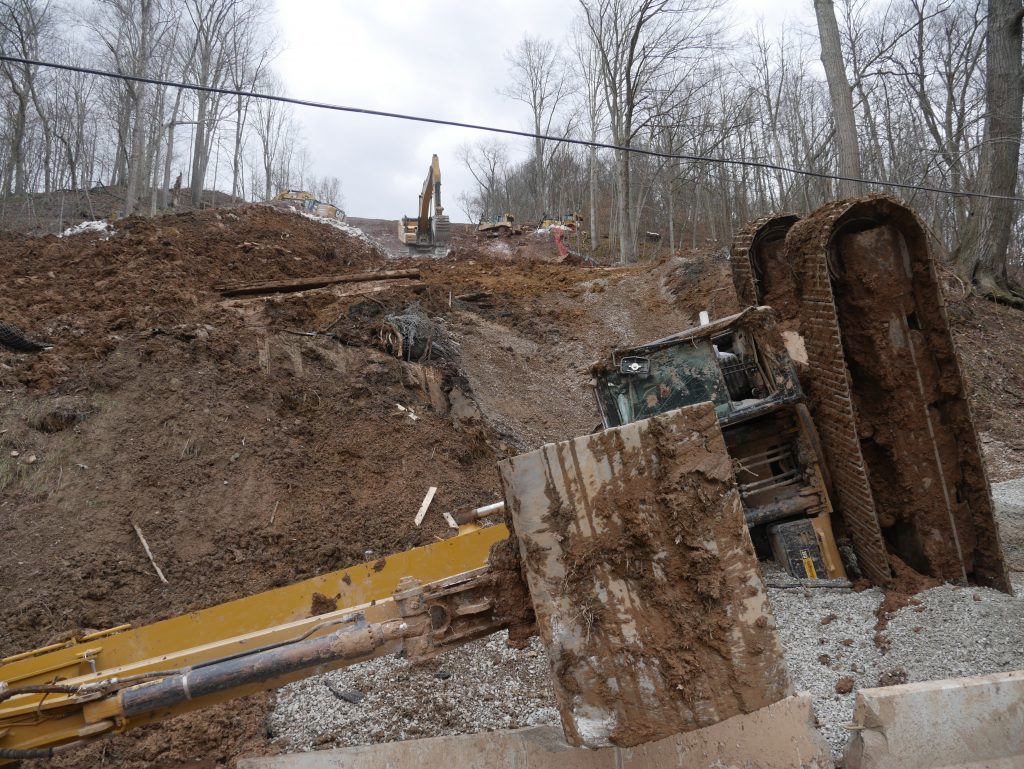


Rover Topple Over: Pipeline Construction in Doddridge County, WV
- bulldog
- Feb 22, 2018
- Uncategorized
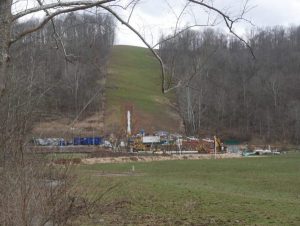
On February 21, a guide took me on a tour of infrackstructure in Doddridge County, WV. A common part of the tour was pulling over to wait as activity related to the pipeline construction blocked roads. Such was the case when we turned down Morgans Run, where a crew was working to stop the flow of mud off a denuded swath of hillside where the pipeline had been buried.
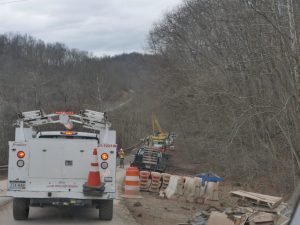
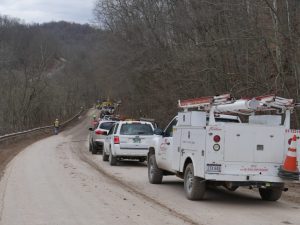

Whoever was waiting on the Frontier truck to get to them had to wait a little bit longer. Traffic quickly built up behind us. The traffic jam offered an opportunity to jump out an talk with some locals trapped in the latest pipeline hold up. One woman was on her way to purchase a puppy from a resident who raises and breeds Labradors. The residents clients have been detained several times lately. The jam also offered a chance to get some shots of the work in progress.
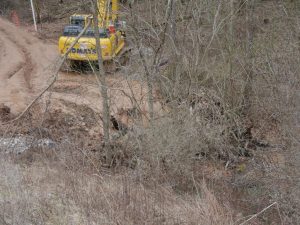
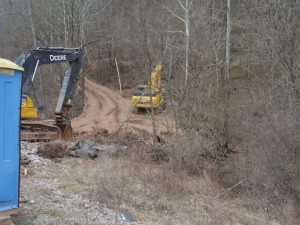
Above: A road carved out of the forest, as part of the pipeline work, is a muddy mess.
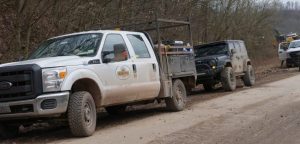
Parked vehicles bear the logo of the contractor.
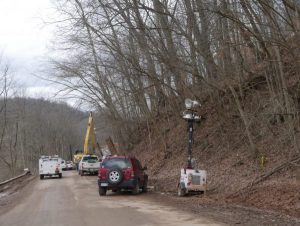
Further down from where we are stopped, it becomes clear that this is not an ordinary traffic stoppage. There’s one track hoe in the road, and is that the treads of another up in the air?
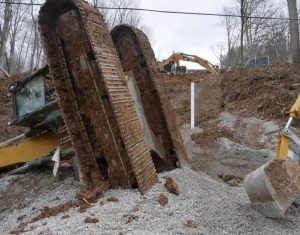 I am informed that the operator is okay. My guide is told he may have broken nose, but otherwise is okay. The track hoes above the wrecked one, working to repair a hillside slip where the Rover Pipeline is buried, continue working. My guide wonders if the contractor carrying out this work for Rover informed OSHA, FERC, and WV DEP of what has happened? What about the local floodplain manager. Someone will be checking.
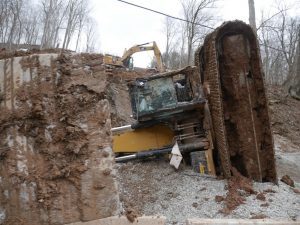
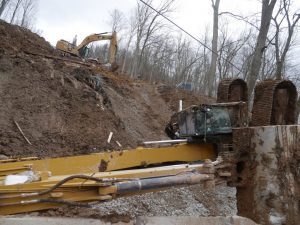
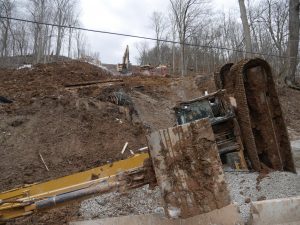
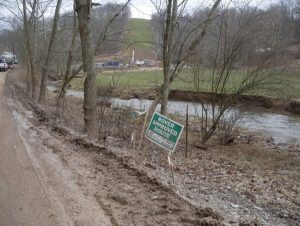
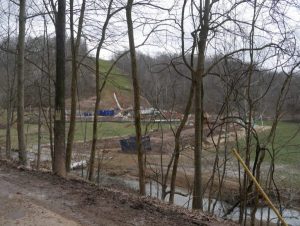
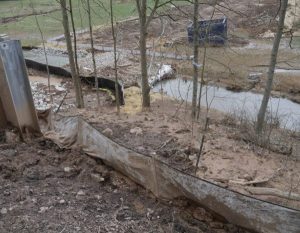
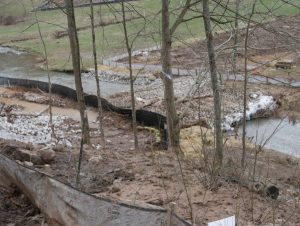
Quite a mess. Meanwhile on the other side of Morgans Run…
According to the company’s website, “The Rover Pipeline is a 713-mile pipeline designed to transport 3.25 billion cubic feet per day of domestically produced natural gas from the rapidly expanding Marcellus and Utica Shale production areas to markets across the U.S. as well as into the Union Gas Dawn Storage Hub in Ontario, Canada, for redistribution back into the U.S. or into the Canadian market.”
So that’s fracked gas that will flow through this pipeline at high pressure. In this area, the diameter of the pipeline will be 36 inches. Should a blast ever occur, the blast or incineration zone would be 1000 to 1400 feet.
This kind of mess during construction here (as well as the troubles with the pipeline in its Ohio section)is deeply troubling. The pending construction of more fracked gas pipelines on similar or even steeper slopes compounds the worry. What havoc will the Mountaineer Express, the Mountain Valley and the Atlantic Coast pipeline wreak? What about all the feeder pipelines, the NGL pipes (natural gas liquids)? Are any of the agencies involved looking at the cumulative impacts of these large-diameter pipelines crisscrossing the state?
Locals are monitoring and reporting slipshod work. Lawsuits are underway. Sit-ins and protests are underway. Learn more. Come to the Tri-State Water Defense Public Forum on March 6 and attend the Community Organizing Summit hosted by the Appalachian Gas Working Group April 6 – 8.
Also see: Rover Pipeline Construction Disrupts Community Near Sistersville, WV, Now and Forever