


Deadline to Comment: Help the Toxic Town of Minden, WV!
- bulldog
- Sep 26, 2018
Visit this site to comment online: MINDEN SUPERFUND NPL COMMENTS
A call to action from our friends at Headwaters Defense:
YES! YOU! TODAY!
Minden, WV has been proposed for the National Priorities List of Superfund Sites by the U.S. EPA and endorsed by the Governor. Now we need the community’s endorsement!
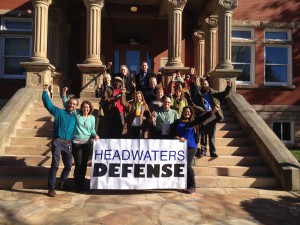
Minden Community Action Team and Headwaters Defense have developed a guide for community members and allies to assist with public comments:
Comment Period: September 13 – November 13
Docket #: EPA-HQ-OLEM-2018-0586.
Website: https://www.federalregister.gov/documents/2018/09/13/2018-19876/national-priorities-list
What are PCBs?
PCBs were dumped in large amounts in the community of Minden. PCBs or polychlorinated biphenyl, are a group of chemicals that had many industrial uses until they were banned in 1977. In the United States PCBs are classified as possible carcinogens. In countries across the world the chemicals are classified as known carcinogens. In addition to cancers, PCBs are known to cause neurological disorder and disease, high blood pressure, developmental problems, reproductive disease, immune system problems, liver and kidney disease, gastrointestinal illness, behavioral problems, skin conditions, birth defects, as well as blood diseases and disorders. There may be more health effects associated with PCB exposure that have yet to be discovered. PCBs are known as persistent organic pollutants. They are labelled as persistent because it takes as long as 495 years for PCBs to decay to half of their original amount.
National Priorities List Status
According to EPA:
A site may undergo remedial action financed by the Trust Fund established under CERCLA (commonly referred to as the “Superfund”) only after it is placed on the NPL, as provided in the NCP at 40 CFR 300.425(b)(1). (“Remedial actions” are those “consistent with permanent remedy, taken instead of or in addition to removal actions. * * *” 42 U.S.C. 9601(24).) However, under 40 CFR 300.425(b)(2) placing a site on the NPL “does not imply that monies will be expended.” The EPA may pursue other appropriate authorities to respond to the releases, including enforcement action under CERCLA and other laws.
 Minden Community Action Team and Headwaters Defense believe there are four reasons putting Minden on the National Priorities List of Superfund sites:
People, Environment, Clean-Up, & Justice.
Minden, WV during the 2001 flood. Toxic Shaffer site is immediately upstream.
People
- People are living in harm’s way of PCB exposure. The Shaffer Equipment company site is surrounded by a residential area.
- People who live or have lived in Minden have experienced many cancers,non-cancerous tumors, neurological disorder and disease, high blood pressure, developmental problems, reproductive disease, immune system problems, liver and kidney disease, gastrointestinal illness, behavioral problems, skin conditions, birth defects, as well as blood diseases and disorders
- The nearby community floods frequently, which mobilizes PCB contamination. After the flood, muds containing an unknown amount of contamination settles in peoples yards and sometimes their homes.This cannot be emphasized enough
- The community has experienced over forty years of continuous, multi-generational exposure to PCB’s. With a half life of 495 years, there is no end in site for the risk of exposure.
- Many elderly and children live in Minden. These populations are the most at risk if exposed to PCB’s.
- The community is seeking an EPA-funded relocation, which has historically only happened for communities near National Priorities List sites.
- The polluted Arbuckle Creek flows directly into the New River which is a source of drinking water for over 27,000 people in the area.
- Some people garden in Minden.
- Some people eat deer that may drink out of and eat vegetation along Arbuckle creek.
- Minden residents cannot do home utility repairs that disturb the soil on their property in fear of unearthing and further spreading PCB’s.
- Minden residents have zero equity in their property. This prohibits the ability for homeowners to sell their homes in order to get enough money to relocate on their own accord. Many community members cannot get loans to do needed home repairs due to the lack of equity in their property, forcing them to live without needed repairs.
Environment
- There are many PCB dump sites besides Shaffer that locals have reported but have not seen any EPA investigation to follow up.
- Minden rests above a network of underground abandoned mines which were used as a a PCB dumpsite by Shaffer equipment company. When it floods these mines spew water into people’s yards. EPA needs to conduct an investigation into the extent of the PCB pollution in the abandoned mines.
- PCB’s were burned in residential homes, the Shaffer Equipment Company, and in the abandoned mines. When PCB’s burn, they can form dioxins and dibenzofurans. These chemicals are also deadly.
- Residents need more EPA sampling to detect PCB levels in their living environment. EPA should provide residents with enough information that they can determine PCB level variations across their property.
- The community of Minden needs a hydrology study so that it can be known why Minden floods more than nearby areas, the current stormwater load from surrounding communities, and how to be prepared for floodwaters that could contain an unknown amount of PCB’s.
- Soil disturbing projects have been allowed to happen in Minden, encouraging more spread of PCB contamination. Some examples include the recent sewer project than was forced through the town and the municipal water line that was constructed through the Shaffer site.
- As well as being home for many people, Minden is also habitat for endangered species.
Clean-Up
- The Minden community needs an EPA remediation set on fully cleaning the PCB pollution. This remediation should include the abandoned mines and other known PCB dumpsites.
- Many dumpsites known to the community are physically difficult to access and will likely require more resources to clean up than less challenging terrain.
- The past EPA solutions have not been complete enough to eliminate the threat to the public health and safety. A more complete long term remediation plan is needed that accounts for all known dump sites and eliminates the possibility for long-term multigenerational exposure to PCB’s.
Justice
- After three cleanup and capping efforts, there is still alarming amounts of uncontained PCB’s in Minden. Residents hope that a more thoroughly planned and executed cleanup will come through National Priorities List designation.
- Residents have been requesting relocation since the 1980’s when Concerned Citizens to Save Fayette County communicated the need for relocation to EPA. Residents hope that NPL status will make relocation possible.
- Minden residents have never received any reparations or relief for the tremendous suffering they have endured. National Priorities List status could bring residents some long awaited relief.
Unknowns
- EPA does not know the full extent of the contamination in Minden. They do not know how far contamination has spread, the health effects of chronic multigenerational PCB exposure, or if there are other toxic chemicals in the community.
- Without knowing the extent of the contamination in Minden, EPA does not know what cleanup resources will be needed or how much that will cost.
- NPL listing secures funds to conduct research necessary to determine the extent of pollution in the area, and cleanup resources needed.
Videos:
CLICK HERE for video: “Contaminated”, Register-Herald
CLICK HERE for Washington Post Video
CLICK HERE for EPA National Priorities List Video
Thank you for advocating for the survival of this West Virginia community!
Copy and paste this email body to share this action alert.
Stay in contact!
Email us: [email protected]
Facebook: facebook.com/groups/headwatersdefense
And here’s further information from our friends at CHEJ:
the U.S. EPA announced it was proposing to add the Shaffer Equipment/Arbuckle Creek Area Site in Minden, West Virginia to the National Priorities List (NPL) of Superfund sites.
Local residents greeted the announcement with mixed feelings. On one hand, there is relief that finally the site will be cleaned up. Yet, they know there are still many questions about what contamination will be covered by the cleanup and, that it’s going to take a long time to get it done. For this reason, the group is focusing on relocation for the families who live around the site. Minden is in a low area at the bottom of the mountains causing serious flooding like in the photo which just spreads the PCBs throughout the community.
PCBs were once commonly used to insulate electrical equipment until research linked PCB exposure to cancer and birth defects. In 1977, the EPA banned their use except in totally enclosed systems.
The site was used more than 30 years ago to manufacture electrical equipment used in the local coal mining industry. Shaffer rebuilt electrical transformers and capacitators, which often involved disposing of residual transformer fluid. Records show the waste was stored in drums and containers at the site, but at times the waste was simply poured onto the ground. Local residents and past employees report that sometimes the PCBs were simply dumped into the abandoned mines. This led to the PCBs spreading throughout the surrounding community, especially during local flooding. Elevated levels of PCBs have been found as far as a mile downstream in Arbuckle Creek which runs through the site.
After the PCB ban, the EPA conducted emergency removals of PCB-contaminated soil in 1984 and 1991, but never completed the cleanup, and thousands of barrels of PCB-laden oil remain on the site. The residents of this tiny town (population 258 in 2016) have lived with the PCBs their community ever since and have watched neighbor after neighbor get sick or die of cancer. A local physician has verified more than 100 cases of cancer among present and former residents and is conducting a study on the link between exposure to PCBs and cancer among Minden residents.
Residents finally decided that enough was enough and formed the Minden Community Action Team (MCAT). They put pressure on EPA to test for PCBs not just at the Shaffer site, but throughout the town and found PCBs everywhere they tested. This led to a meeting with Governor Jim Justice to request that the site be added to the Superfund list. Justice recently complied and the site will be added following a 60 day comment period.
Representatives from MCAT are part of CHEJ’s Superfund Coalition that has been bringing local leaders to DC to meet with high ranking EPA officials including Scott Pruitt and his successor Andrew Wheeler. CHEJ is coordinating these meetings on a quarterly schedule to provide local groups with the opportunity to make their case directly to EPA leadership. So far, EPA’s response has been to visit each of the sites from which the leaders have come to DC and to work closely with local leadership.
Please consider donating to CHEJ’s Superfund Coalition Campaign so that we can continue to bring local leaders to meet with EPA. Every dollar makes a difference.